Why do Christians feel that they have the right to judge people, including their fellow believers? It is something that has perplexed me for years, but a few things I have observed lately has prompted this post.
A number of years back I read Philip Yancey's book "What's So Amazing About Grace?" Not one to mince words, Yancey opens his book by recounting a story of a prostitute who has hit rock bottom and had started renting out her two year old daughter for sex so she could pay for her own drug habit. It is a short story but those few lines often produces two reactions - one of sadness at the depth of desperation this woman must have felt; or one of judgement, looking down at the woman and dismissing her as a deadbeat who shouldn't have kids in the first place. It was this second reaction that was the crux of the story. Yancey tells how this woman was asked if she had ever thought of going to a church for help. Her response should hit all Christians like the knockout blow of a heavyweight boxing bout. '"Church!" she cried. "Why would I ever go to there? I was already feeling terrible about myself. They'd just make me feel worse."' They'd just make me feel worse. Ouch! What an indictment. Yet, nearly twenty years since Yancey penned that book, things are no different. The people of God who should be the very instruments of grace in the world are often the tools of judgement.
I realised this in a personal way over the course of the past eighteen months as my marriage broke up. People who said they were friends and would stick by me no matter what stopped communicating with me. Some even refused to have me in their homes because they had heard stories about me which they said concerned them. And people who I would call acquaintances felt they could confront me about my marriage break-up, one via text and the other via Facebook messenger. I only just found this last confrontation a year later and it shocked me. Shocked that a fellow believer felt they had the right to do this. Not to come alongside and support or pray or offer help or assistance in any way, but to judge. Without going into too much detail, they suggested I reconsider the next steps due to the heritage they believed I was leaving for my children. They also brought up my deceased father as part of their argument - "What would your father want you to do? If he were here what would his challenge to you be? Would he want to see you tear their (my children) lives apart?" Now I hardly know this person. They don't really know me either. What had happened in my marriage was private and not known to many people. This person was going on rumour and hearsay but still felt they were within their right to send me this message.
And that is the problem. When did some Christians feel it was their duty to judge? After all, Jesus told His followers not to judge (see Matthew 7:1, Luke 6:37, Luke 6:41 to name a few), as did Paul, one of the fathers of the early Christian faith (see Romans 2:1, Romans 14:10, 1 Corinthians 4:5). It's as if those of us who profess Christian faith have put ourselves up on a high horse and in the process, elevated ourselves into the place that should only be the domain of God.
Christians are to be the salt and light in the world, and as Eugene Petersen puts so beautifully, bring out the God flavours and God colours. Not to be judges of it. Judging creates an "us and them" mentality. It is divisive. It is hurtful and it is unnecessary. When the Pharisees brought a woman caught in adultery before of Jesus (and seeing as the law stated anyone caught in adultery, where was the guy?) did He condemn her? No. He instead looked at the Pharisees and said "he who is sinless can cast the first stone". Not one stone was thrown. The Pharisees were after judgement, justice and punishment. Jesus was all about restoration. As people who claim to follow Jesus, those of us who call ourselves Christians should be all about restoration too.
"But what about the laws of God?" I hear you ask. "What about what is right and just?" "Surely purity and faithfulness are important to God and we should defend that?" Good questions. But in an attempt to answer them let me take a leaf out of Christ's book and ask some questions of my own: "Is God all-powerful, all-knowing and everywhere? Is God just? Can God, through the work of restoration in someone, bring them to a level of faithfulness and purity that He is happy with?" If God is all about restoring people to Himself, it isn't up to us to decide whether people should be judged or not. That is God's prerogative. Not ours. After all, everyone has fallen short of the glory of God. No-one is exempt. We all stuff up and make mistakes. Some of those mistakes can be bigger than others. We are all fallen. It is only through God that we can be restored to God.
It is also important not to judge for the sake of others. Nineteenth century Christian evangelist Dwight L. Moody once said, “Of one hundred men, one will read the Bible; the ninety-nine will read the Christian.” Too often our judgemental attitudes turn people off. The word hypocrisy often is spoken when describing Christians. How can people know God's love if you don't first show love for them? If we who are Christians are called to be salt and light, and being God's instruments of grace in the process, we should be embarrassed that the world around us doesn't see grace as being present in the church. I like the words of the singer Hozier: "... That's a fine looking high horse, What you got in the stable?, We've a lot of starving faithful ..." Perhaps I'm taking it a bit out of context, but for me it describes how the church is seen from the outside all too well. A fine looking high horse. Time to get off it and down with others, walking alongside them and helping them in their struggles. What's in the stable? we've got faithful who are hungry. It's almost like we have kept Jesus in the stable and people hungry for love and grace are being denied. That is what judging does - it hides away grace and denies it to a world in desperate need of it.
Judging has no place in our churches. It gets in the way of God and His grace flowing into people's lives. For too long we as Christians have turned people off church and off God with our judgemental attitudes (despite sometimes having well meaning intentions of preserving the idea of holiness for God). It's time we dropped our judging and picked up grace, not just for ourselves but for all around us. As Yancey says, “Jesus declared that we should have one distinguishing mark: not political correctness or moral superiority, but love.”
Tuesday, 5 April 2016

Thursday, 31 March 2016
Don't Deny Our History
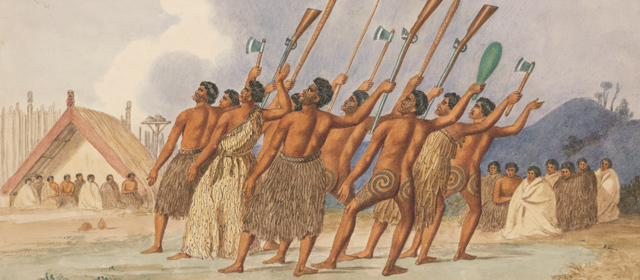
Why were the land wars fought? Who fought in them? Where did the battles take place? How long did they last? The most basic of answers were that the land wars were fought between Maori and the Crown (often thought of as the British Army) because Maori were not happy with the confiscation of land by the Crown, with many of the battles being fought in the Waikato and Taranaki. But how long the conflict lasted many of us couldn’t say.
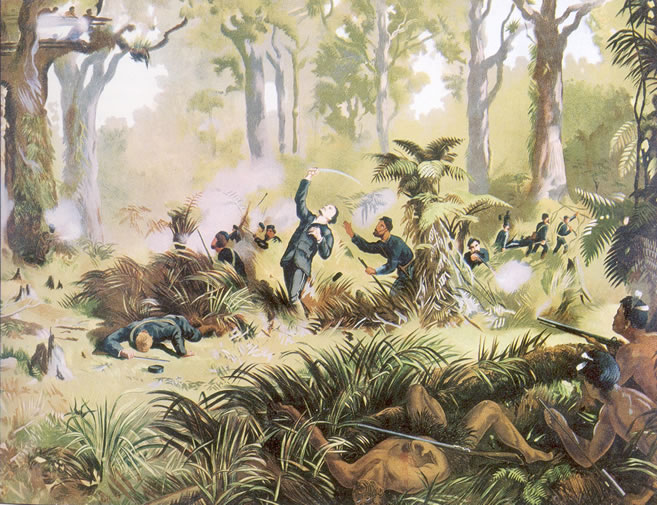
So to hear, like we have over the last couple of days, that the Ministry of Education has stated that it will not make teaching the Land Wars compulsory is very disappointing. Radio New Zealand reported yesterday that the Ministry Associate Deputy Secretary said it wouldn’t prescribe to schools they must teach certain subjects, but will maintain a broad approach to education, while the Ministry Te Reo Maori group manager said that helping schools develop their own content around the land wars was the focus. Both comments were made to the Maori Affairs Select Committee which was looking at a petition asking for a commemoration day and for the history of the Land Wars to be taught at schools.

Tuesday, 23 February 2016
Successful Beach Bid a Slap in the Face for Government?
We did it! We came together and we bought a beach! From the random musings of two mates over Christmas to nearly 40,000 of us donating what we could or wanted, we as a nation now have a new addition to our DOC estate. A beach that was in private hands is now to become part of the Abel Tasman National Park, which surrounds it. This is great news and the perfect, and right, result to this story. It will be a fantastic addition to an already stunningly beautiful National Park.

However, while we all celebrate the purchase of this amazing part of our nation, and rightly so, I can't help but feel a tinge of sadness over this whole process. Sadness because it shouldn't have needed to require two mates kicking off a crowd-funding appeal to have this beach added to the DOC estate. The government should've stepped in and just purchased the land and added it to the surrounding National Park. But, unfortunately, for too long the government stayed quiet and non-commital. They are the "Johnny come lately's" in this process. The spin doctors in Wellington will be working hard to sell this as a great win for New Zealand and that the government is rapt to see the passion of thousands of Kiwis, as well as being proud to partner with all of those Kiwis in purchasing this land.
But the reality is a lot different. I'm sure that DOC would've liked to have just purchased it when the land was about to go up for sale but the reality is that their budget has been consistently slashed in budgets and their funding wouldn't allow it. It is hard enough for them to have enough money to continue their conservation work without partnering with businesses and community groups - something that the current government is keen to encourage and promote. The minister could have chosen to get involved. So could the PM, who after all is the Minister of Tourism. Cabinet could've come together and decided to purchase the beach for all New Zealanders. But they didn't. And despite this beach being in former Conservation Minister Nick Smith's backyard, it was up to the public to ensure this beautiful beach is added to the Crown's responsibility. Instead the government and the minister stayed silent and in the shadows until it looked like the thing might actually work! It was spineless, sad and very disappointing.
But there is another part to this which is encouraging. We, the people stood up. We made ourselves heard and it is a message that has rung loud and clear from Cape Reinga to Bluff but most clearly heard across the Cook Strait in the halls of Parliament. It is a message that unequivocally says that we Kiwis care about our land and our country and we want our government, who we elect to run the nation in our stead, to listen to us. It states that losing land, whether pristine beach or big farms to wealthy interests is not necessarily in the best interests of our nation. We stood up to the powers that be and said that we want to see the right thing done by the country. We declared that not everything is about money. Some things are more important than a healthy balance sheet or economic prosperity.
It was right that Awaroa Beach was bought and added to the Abel Tasman National Park. It was and is the only sensible decision and the only one in the best interest of our nation. It also says that we aren't as happy with the job the government is doing, despite what there advisors like to tell them and the media. It reminds them that we, the voting public, should never be taken for granted.
So, I say a huge thank you and congrats to Duane and Adam and their team. I say a huge thank you and congrats to the nearly forty thousand who gave. And I say to the politicians, pay attention. We won't go quietly into the night. We want what's best for our entire country, not just for a select few. Don't ever take us for granted.

However, while we all celebrate the purchase of this amazing part of our nation, and rightly so, I can't help but feel a tinge of sadness over this whole process. Sadness because it shouldn't have needed to require two mates kicking off a crowd-funding appeal to have this beach added to the DOC estate. The government should've stepped in and just purchased the land and added it to the surrounding National Park. But, unfortunately, for too long the government stayed quiet and non-commital. They are the "Johnny come lately's" in this process. The spin doctors in Wellington will be working hard to sell this as a great win for New Zealand and that the government is rapt to see the passion of thousands of Kiwis, as well as being proud to partner with all of those Kiwis in purchasing this land.
But the reality is a lot different. I'm sure that DOC would've liked to have just purchased it when the land was about to go up for sale but the reality is that their budget has been consistently slashed in budgets and their funding wouldn't allow it. It is hard enough for them to have enough money to continue their conservation work without partnering with businesses and community groups - something that the current government is keen to encourage and promote. The minister could have chosen to get involved. So could the PM, who after all is the Minister of Tourism. Cabinet could've come together and decided to purchase the beach for all New Zealanders. But they didn't. And despite this beach being in former Conservation Minister Nick Smith's backyard, it was up to the public to ensure this beautiful beach is added to the Crown's responsibility. Instead the government and the minister stayed silent and in the shadows until it looked like the thing might actually work! It was spineless, sad and very disappointing.
But there is another part to this which is encouraging. We, the people stood up. We made ourselves heard and it is a message that has rung loud and clear from Cape Reinga to Bluff but most clearly heard across the Cook Strait in the halls of Parliament. It is a message that unequivocally says that we Kiwis care about our land and our country and we want our government, who we elect to run the nation in our stead, to listen to us. It states that losing land, whether pristine beach or big farms to wealthy interests is not necessarily in the best interests of our nation. We stood up to the powers that be and said that we want to see the right thing done by the country. We declared that not everything is about money. Some things are more important than a healthy balance sheet or economic prosperity.
It was right that Awaroa Beach was bought and added to the Abel Tasman National Park. It was and is the only sensible decision and the only one in the best interest of our nation. It also says that we aren't as happy with the job the government is doing, despite what there advisors like to tell them and the media. It reminds them that we, the voting public, should never be taken for granted.
So, I say a huge thank you and congrats to Duane and Adam and their team. I say a huge thank you and congrats to the nearly forty thousand who gave. And I say to the politicians, pay attention. We won't go quietly into the night. We want what's best for our entire country, not just for a select few. Don't ever take us for granted.
Wednesday, 17 February 2016
NZ Awards - Predictable and disappointing
I know that I may get a bit of flak for what I say here so let me start by saying that this is not a criticism of the people involved but rather an observation of how shallow and narrow focused we are as a country.
So last night the New Zealander of the Year was named. And whilst there has been an overwhelming positivity over Richie McCaw winning, when I heard the news I felt a tinge of disappointment, even saying to myself "shame". I felt that tinge of disappointment even more when I heard that Lydia Ko won the Young New Zealander of the Year. Now, I'm not anti-sport. In fact, far from it. I love sport. I love how it can bring people together. I love how exciting and enjoyable it is. To be fair I am quite the sports fan. I celebrated the All Blacks winning the Rugby World Cup. I happily enter into office banter about how a team is going, who should be in or not and all that can be talked about in sport. I have also loved watching the rise and rise of Lydia Ko, marvelling at how composed she is and how easy she makes the game of golf look.
But, and here is where my disappointment lies, picking a sports person as New Zealander of the Year is too easy. It is too predictable and to be honest it is disappointing. What it does do is show how sports orientated this country is. I know there are people who feel that Richie particularly deserves his award but what exactly has he done? Sure, he lead a team of well paid professional athletes to victory in a competition we as a nation feel is ours by right. But that's about it. In the scheme of things it enabled us to forget about the challenges of life for a short while, but apart from the lasting effect this achievement will have in the statistics books, what else has it achieved?
It makes it particularly hard to swallow when the other two finalists have done some very important, significant things that are having, and going to have an ongoing and lasting effect on our society.
Rob Fenwick is a ground breaker, showing that business and environmentalism can go hand in hand. Not only has he looked to grow his commercial interests, but he has done it without compromising on his belief in conservation and sustainable development. He has served on a number of boards with a focus on conservation and sustainability. The company he co-founded, Living Earth, has converted millions of tons of waste into compost.
Then there is Louise Nicholls. If there is ever a person who embodies courage, strength and determination, Louise is it. Not only did she have the courage to speak out over being sexually assaulted by policemen when she was a teenager, she never gave up and had to endure and battle through five court cases. She wanted to hold the men responsible to account and her determination has seen the courts and police look at how they treat sexual violence victims. Now she is working with the police to improve their understanding of what a victim goes through. Her tireless efforts will see generations of police show my concern, compassion and care for sexual violence victims. Our society will benefit from her work for years to come.
And for me this is where the rubber hits the road. We as a society would rather celebrate the momentary joy of a sporting win and immortalise it than celebrate the tireless efforts of others. We would rather find our societal validation in our sporting achievements than take pride in the efforts of our fellow Kiwis to make not just this country, but the world a better place for us and our children. WE elevate sports to a place it does not deserve. And that is sad. Yes it is good to honour our sportspeople, but hey we already do that with their own awards night (the Halbergs). The NZ Awards should be an opportunity to celebrate the amazing achievements of our fellow Kiwis in other areas.
---------------------------------------------------
It was great to read this morning to see someone else writing about the disappointing result of the NZ Awards. Alex Braae explains why Louise Nicholls would be a better winner, and I agree - Louise would have been my first choice too.
http://www.newstalkzb.co.nz/opinion/alex-braae-louise-nicholas-should-have-won/
So last night the New Zealander of the Year was named. And whilst there has been an overwhelming positivity over Richie McCaw winning, when I heard the news I felt a tinge of disappointment, even saying to myself "shame". I felt that tinge of disappointment even more when I heard that Lydia Ko won the Young New Zealander of the Year. Now, I'm not anti-sport. In fact, far from it. I love sport. I love how it can bring people together. I love how exciting and enjoyable it is. To be fair I am quite the sports fan. I celebrated the All Blacks winning the Rugby World Cup. I happily enter into office banter about how a team is going, who should be in or not and all that can be talked about in sport. I have also loved watching the rise and rise of Lydia Ko, marvelling at how composed she is and how easy she makes the game of golf look.
But, and here is where my disappointment lies, picking a sports person as New Zealander of the Year is too easy. It is too predictable and to be honest it is disappointing. What it does do is show how sports orientated this country is. I know there are people who feel that Richie particularly deserves his award but what exactly has he done? Sure, he lead a team of well paid professional athletes to victory in a competition we as a nation feel is ours by right. But that's about it. In the scheme of things it enabled us to forget about the challenges of life for a short while, but apart from the lasting effect this achievement will have in the statistics books, what else has it achieved?
It makes it particularly hard to swallow when the other two finalists have done some very important, significant things that are having, and going to have an ongoing and lasting effect on our society.
Rob Fenwick is a ground breaker, showing that business and environmentalism can go hand in hand. Not only has he looked to grow his commercial interests, but he has done it without compromising on his belief in conservation and sustainable development. He has served on a number of boards with a focus on conservation and sustainability. The company he co-founded, Living Earth, has converted millions of tons of waste into compost.
Then there is Louise Nicholls. If there is ever a person who embodies courage, strength and determination, Louise is it. Not only did she have the courage to speak out over being sexually assaulted by policemen when she was a teenager, she never gave up and had to endure and battle through five court cases. She wanted to hold the men responsible to account and her determination has seen the courts and police look at how they treat sexual violence victims. Now she is working with the police to improve their understanding of what a victim goes through. Her tireless efforts will see generations of police show my concern, compassion and care for sexual violence victims. Our society will benefit from her work for years to come.
And for me this is where the rubber hits the road. We as a society would rather celebrate the momentary joy of a sporting win and immortalise it than celebrate the tireless efforts of others. We would rather find our societal validation in our sporting achievements than take pride in the efforts of our fellow Kiwis to make not just this country, but the world a better place for us and our children. WE elevate sports to a place it does not deserve. And that is sad. Yes it is good to honour our sportspeople, but hey we already do that with their own awards night (the Halbergs). The NZ Awards should be an opportunity to celebrate the amazing achievements of our fellow Kiwis in other areas.
---------------------------------------------------
It was great to read this morning to see someone else writing about the disappointing result of the NZ Awards. Alex Braae explains why Louise Nicholls would be a better winner, and I agree - Louise would have been my first choice too.
http://www.newstalkzb.co.nz/opinion/alex-braae-louise-nicholas-should-have-won/
Thursday, 4 February 2016
Time to Kill that Attitude!
This week has been interesting. Two incidents have caught people's attention and left me pondering. The first was the entirely inappropriate and utterly disgusting language and behaviour of the two young men who injected themselves into Kim Vinnell's live cross into "Story" on TV3 on Monday night and then the subsequent comments they made the following night when challenged by Kim. The second was the story of the Return of Kings planning mass meetings globally, including in New Zealand. Both incidents were disgusting and sickening, and unfortunately, both showed young men in a very bad light and highlighted an underlying sexism in our culture that needs to be buried and never resurrected again.
Much has been written about the disgusting behaviour of the two young men who injected themselves into a live broadcast and used the phrase "f*** her right in the p***y". When did this ever become a thing to say? It is gross, foul and abhorrent. Just as abhorrent has been the number of people who have jumped in and attacked Kim, and trying to blame her and her camera operator for being disorganised and allowing this to happen. Some of the same people, as well as others, have also defended the two young men with pathetic throw away lines like "it's just boys being boys". The sad fact is this is exactly the same as saying a woman deserved to be raped because of the clothes she was wearing, claiming "she was asking for it because of what she was wearing". It shows an attitude that permeates male culture and needs to end.
And before men jump up and down and claim they have never condoned rape, ask yourself these questions: have you ever joked with male friends about a woman's sexuality or what she would be like in bed?; have you ever looked at pornography?; have you ever oogled at scantily clad woman in photo shoots?; have you ever compared women with friends and rated them in a top 10?; have you ever caught yourself looking at a woman and thought instantly about aspects of her body (for example, "nice arse", "check out those breasts!")? Let's not kid ourselves men, we are all guilty of allowing this attitude to grow and fester to the point that we claim it is all just a bit of harmless fun, or boys simply being boys.
And that brings me to the "Return of Kings" group - an online group who believe women should be controlled by men and whose founder reportedly believes rape on private property should be legalised. I am relieved that the planned meetings have been cancelled due to the justified outrage over this group. However, I am also saddened and sickened to think that fellow men in New Zealand would be interested in being part of this group. But I also realise that in male culture there is a very fine, blurred line between what is seen as acceptable and what is seen as disgusting and inappropriate. In fact, that line has become so blurred for many men it is easy for them to express their disgust at a group like Return of Kings and then joke with their mates about some attractive woman they've just seen walking down the road.
Both stem from a wrong attitude about women. It is an attitude that says that women are less than men. It is an attitude that says it is okay to talk about a woman as if she was some object or thing to possess. It is an attitude that says that men are the ultimate authority and women must be submissive. It is an attitude that says a woman's place is in the home, cooking for their man and looking after the babies. It is sexism pure and simple. As hard and challenging as that may be to read, that is the sad reality. Sexism still exists in this country. It isn't just in the extremities of society or found in deep dark alleys of our culture. It is widespread. We just don't talk about it. We pretend it isn't there or that it is just a bit of fun. And it is time it was dead and buried.
I challenge all men to speak out. To tell their friends that those comments or attitudes aren't appreciated. You may face a bit of ridicule or ribbing. You may be challenged by the perpetrators (who'll be your mates, colleagues, or family) with comments like, "come on, it was just a bit of fun"; "oh, don't be so sensitive" or worse "oh stop being so self-righteous!" You may even be reminded of time when you said similar things, or participated in the same unhealthy conversations. But hold firm. Admit your failings in the past. But don't compromise. If enough of us speak up and challenge us we can kill this attitude off.
Much has been written about the disgusting behaviour of the two young men who injected themselves into a live broadcast and used the phrase "f*** her right in the p***y". When did this ever become a thing to say? It is gross, foul and abhorrent. Just as abhorrent has been the number of people who have jumped in and attacked Kim, and trying to blame her and her camera operator for being disorganised and allowing this to happen. Some of the same people, as well as others, have also defended the two young men with pathetic throw away lines like "it's just boys being boys". The sad fact is this is exactly the same as saying a woman deserved to be raped because of the clothes she was wearing, claiming "she was asking for it because of what she was wearing". It shows an attitude that permeates male culture and needs to end.
And before men jump up and down and claim they have never condoned rape, ask yourself these questions: have you ever joked with male friends about a woman's sexuality or what she would be like in bed?; have you ever looked at pornography?; have you ever oogled at scantily clad woman in photo shoots?; have you ever compared women with friends and rated them in a top 10?; have you ever caught yourself looking at a woman and thought instantly about aspects of her body (for example, "nice arse", "check out those breasts!")? Let's not kid ourselves men, we are all guilty of allowing this attitude to grow and fester to the point that we claim it is all just a bit of harmless fun, or boys simply being boys.
And that brings me to the "Return of Kings" group - an online group who believe women should be controlled by men and whose founder reportedly believes rape on private property should be legalised. I am relieved that the planned meetings have been cancelled due to the justified outrage over this group. However, I am also saddened and sickened to think that fellow men in New Zealand would be interested in being part of this group. But I also realise that in male culture there is a very fine, blurred line between what is seen as acceptable and what is seen as disgusting and inappropriate. In fact, that line has become so blurred for many men it is easy for them to express their disgust at a group like Return of Kings and then joke with their mates about some attractive woman they've just seen walking down the road.
Both stem from a wrong attitude about women. It is an attitude that says that women are less than men. It is an attitude that says it is okay to talk about a woman as if she was some object or thing to possess. It is an attitude that says that men are the ultimate authority and women must be submissive. It is an attitude that says a woman's place is in the home, cooking for their man and looking after the babies. It is sexism pure and simple. As hard and challenging as that may be to read, that is the sad reality. Sexism still exists in this country. It isn't just in the extremities of society or found in deep dark alleys of our culture. It is widespread. We just don't talk about it. We pretend it isn't there or that it is just a bit of fun. And it is time it was dead and buried.
I challenge all men to speak out. To tell their friends that those comments or attitudes aren't appreciated. You may face a bit of ridicule or ribbing. You may be challenged by the perpetrators (who'll be your mates, colleagues, or family) with comments like, "come on, it was just a bit of fun"; "oh, don't be so sensitive" or worse "oh stop being so self-righteous!" You may even be reminded of time when you said similar things, or participated in the same unhealthy conversations. But hold firm. Admit your failings in the past. But don't compromise. If enough of us speak up and challenge us we can kill this attitude off.
Tuesday, 24 November 2015
Flags, Emblems and Illogical Arguments
The Prime Minister has had a shocker. To try and attach the tragedy that is the death of Jonah Lomu to our flag referrendum is an appalling error of judgement. Not only was it an errroneous connection, it was also a weak argument and most obviously pushing his preference on the nation yet again. (for those who missed it, this is what John Key said on the Paul Henry Show, referring to the Irish Examiner's classy tribute to Jonah Lomu after his sudden and unexpected death.
 "Here's the silver fern, front page, with one frond coming off
like a tear, with Jonah Lomu and his years," Key said. "Amazingly
powerful. That's New Zealand. Where was our flag? Nowhere.")
"Here's the silver fern, front page, with one frond coming off
like a tear, with Jonah Lomu and his years," Key said. "Amazingly
powerful. That's New Zealand. Where was our flag? Nowhere.")
But let's for argument sake, concede that what the PM said has some merit and follow it's logic through to it's natural conclusion. His argument is basically that because everyone connects the silver fern to New Zealand, that it should be on our flag. It is used throughout our sporting codes as a symbol of their connection to the land that they are playing for. Don't get me wrong, I think it is a beautiful emblem. But, the jump from emblem to being on the flag is a dubious one. By the PM's logic, the following must be true also: We are known the world over as Kiwis. We are proud to be known as that, even if Americans think we have named ourselves after a fruit. Anyway, because a Kiwi is a powerful symbol and connects us to this land, surely by following John Key's logic, it too deserves to be on our flag also.
 Oh, what about sheep? Whenever I have travelled overseas, people automatically refer to the number of sheep we have when I say I am from New Zealand. That and Lord of the Rings. Perhaps they too should be on our flag? So we have a laser eyed kiwi with a silver fern and a sheep and the Eye of Sauron. Perhaps the kiwi could be blasting the sheep thus symbolising that we are great at exporting sheep meat for the purpose of cooking. Behind the kiwi could be the Eye of Sauron, symbolising our growing movie industry and a healthy tourism industry helped in part by the LOTR fans descending on our fair lands all in the hope of finding an orc, or a troll, or even meet with an elf.
The reality is that just because an emblem can represent a nation and symbolise that nation well, it doesn't mean that it has to be on the flag. Which brings me to the next part of the argument. Do we need to have the silver fern on the flag? Is it necessary or even non negotiable?
I would argue that a symbol can represent a country but it doesn't have to be on the flag as well. Why do I say that? Well, because it is true and appears time and time again. Let's look at some of the nations we saw at the Rugby World Cup to see how things are. Firstly, the English rugby side uses a red English rose as their symbol. Their flag? A red cross on a white background:


Interesting right? They aren't the same.
How about Scotland? Emblem is a thistle, yet the flag is a white cross on a blue background:


And Ireland? A shamrock and a flag with three colours: Green, White and Orange.


I could also mention Japan, whose endeavours were the toast of the World Cup. Known as the Cherry Blossoms, and whose flag is a simple but effective red circle, symbolising the sun, on a white background. Then there is the team they defeated in their first game, South Africa. Known as the Springboks (which is an interesting story regarding redeeming the name from apartheid) their flag has no springbok on it and instead uses colours and shapes to symbolise their country, known now as the Rainbow Nation.
In fact South Africa is an interesting case and actually one I think we should look to as to how to change flags properly. The Springbok is a beloved symbol in South Africa, particularly amongst rugby supporters. They are proud of the heritage that the symbol represents. They have flags with the springbok on it that are waved and flown at rugby matches and other sports games. Yet the springbok doesn't even register on their flag. They chose something that symbolises who they now are. It was a fresh start flag wise and represented the fresh start the country itself was undertaking.
You can have a wonderful, bold, striking flag that the whole nation can be proud of and still have a wonderful symbol that represents our sporting codes. Both can be different. To claim that the silver fern has to be on our flag limits our options for the flag. To argue that because the silver fern is used for many of our sporting codes therefore it must be on the flag is an argument that easily and quickly falls down.
Now there is nothing wrong with having the silver fern on the flag if that is the winner. If the majority of people want a flag with a silver fern then so be it. However to claim, as the PM has, that it must be on the flag is wrong. It is fine to state that your personal preference is for a flag with a silver fern on it, but don't say it must because it doesn't have to.
My personal preference has always been for a flag based on the tino rangatiratanga flag, a wonderful connection to the Maori culture with a symbolic koru design and three colours. Bold, simple, striking and uniquely Kiwi. It looks like a flag, flies like a flag and stands out amongst other flags. However, no flags based on this design made the final contenders so I have to decide which one of the final five I would prefer. That hasn't been easy and I'm still not sure which one I will vote for yet. What I haven't appreciated is the Prime Minister of our land constantly proclaiming his thoughts and opinions in the media. I feel he is trying to tell me which one to vote for without blatantly saying "vote for this one". In fact it bothers me so much that I am reluctant to put John Key's preference as my number one.
Yes the whole process has been flawed. It could have been and should have been done better. Vexillologists (flag experts), artists and designers should have been on the flag consideration panel. Perhaps what should have happened is that a panel of vexillologists, artists and designers were tasked with coming up with five strong potential designs that we as a nation could vote on. The reality though is that it hasn't. We have to make do with the process we have. So consider all the options on their own merits, but don't just fall into the trap of voting for a flag simply because it has a symbol on it that our sporting codes use. Vote for whichever design you feel is the best on its merits. If you don't like any of the designs there are plenty of voices out there stating how you should vote strategically. If you like our current flag, vote for your next best in this referrendum and vote for the current flag in the next. Do what you feel is the best thing for our country, but don't, please, vote for a design simply because the PM likes it or it has a symbol on it that is used in sport.
 -------------------------
By the way, if you want to know more about what makes a good flag according to vexillologists and designers, check out Lachlan Forsyth's item on Story the other day. http://www.3news.co.nz/tvshows/story/what-makes-a-good-flag-2015112319#axzz3sOzaAzVj
Also, here is a great blog from a vexillologist dispelling some of the arguments put forward in this debate. Well worth a read: https://medium.com/@thomaslebas/shedding-light-on-flag-design-840c3e3fa83f#.o3rzt8b8u

But let's for argument sake, concede that what the PM said has some merit and follow it's logic through to it's natural conclusion. His argument is basically that because everyone connects the silver fern to New Zealand, that it should be on our flag. It is used throughout our sporting codes as a symbol of their connection to the land that they are playing for. Don't get me wrong, I think it is a beautiful emblem. But, the jump from emblem to being on the flag is a dubious one. By the PM's logic, the following must be true also: We are known the world over as Kiwis. We are proud to be known as that, even if Americans think we have named ourselves after a fruit. Anyway, because a Kiwi is a powerful symbol and connects us to this land, surely by following John Key's logic, it too deserves to be on our flag also.

The reality is that just because an emblem can represent a nation and symbolise that nation well, it doesn't mean that it has to be on the flag. Which brings me to the next part of the argument. Do we need to have the silver fern on the flag? Is it necessary or even non negotiable?
I would argue that a symbol can represent a country but it doesn't have to be on the flag as well. Why do I say that? Well, because it is true and appears time and time again. Let's look at some of the nations we saw at the Rugby World Cup to see how things are. Firstly, the English rugby side uses a red English rose as their symbol. Their flag? A red cross on a white background:


Interesting right? They aren't the same.
How about Scotland? Emblem is a thistle, yet the flag is a white cross on a blue background:


And Ireland? A shamrock and a flag with three colours: Green, White and Orange.


I could also mention Japan, whose endeavours were the toast of the World Cup. Known as the Cherry Blossoms, and whose flag is a simple but effective red circle, symbolising the sun, on a white background. Then there is the team they defeated in their first game, South Africa. Known as the Springboks (which is an interesting story regarding redeeming the name from apartheid) their flag has no springbok on it and instead uses colours and shapes to symbolise their country, known now as the Rainbow Nation.
In fact South Africa is an interesting case and actually one I think we should look to as to how to change flags properly. The Springbok is a beloved symbol in South Africa, particularly amongst rugby supporters. They are proud of the heritage that the symbol represents. They have flags with the springbok on it that are waved and flown at rugby matches and other sports games. Yet the springbok doesn't even register on their flag. They chose something that symbolises who they now are. It was a fresh start flag wise and represented the fresh start the country itself was undertaking.
You can have a wonderful, bold, striking flag that the whole nation can be proud of and still have a wonderful symbol that represents our sporting codes. Both can be different. To claim that the silver fern has to be on our flag limits our options for the flag. To argue that because the silver fern is used for many of our sporting codes therefore it must be on the flag is an argument that easily and quickly falls down.
Now there is nothing wrong with having the silver fern on the flag if that is the winner. If the majority of people want a flag with a silver fern then so be it. However to claim, as the PM has, that it must be on the flag is wrong. It is fine to state that your personal preference is for a flag with a silver fern on it, but don't say it must because it doesn't have to.
My personal preference has always been for a flag based on the tino rangatiratanga flag, a wonderful connection to the Maori culture with a symbolic koru design and three colours. Bold, simple, striking and uniquely Kiwi. It looks like a flag, flies like a flag and stands out amongst other flags. However, no flags based on this design made the final contenders so I have to decide which one of the final five I would prefer. That hasn't been easy and I'm still not sure which one I will vote for yet. What I haven't appreciated is the Prime Minister of our land constantly proclaiming his thoughts and opinions in the media. I feel he is trying to tell me which one to vote for without blatantly saying "vote for this one". In fact it bothers me so much that I am reluctant to put John Key's preference as my number one.
Yes the whole process has been flawed. It could have been and should have been done better. Vexillologists (flag experts), artists and designers should have been on the flag consideration panel. Perhaps what should have happened is that a panel of vexillologists, artists and designers were tasked with coming up with five strong potential designs that we as a nation could vote on. The reality though is that it hasn't. We have to make do with the process we have. So consider all the options on their own merits, but don't just fall into the trap of voting for a flag simply because it has a symbol on it that our sporting codes use. Vote for whichever design you feel is the best on its merits. If you don't like any of the designs there are plenty of voices out there stating how you should vote strategically. If you like our current flag, vote for your next best in this referrendum and vote for the current flag in the next. Do what you feel is the best thing for our country, but don't, please, vote for a design simply because the PM likes it or it has a symbol on it that is used in sport.

By the way, if you want to know more about what makes a good flag according to vexillologists and designers, check out Lachlan Forsyth's item on Story the other day. http://www.3news.co.nz/tvshows/story/what-makes-a-good-flag-2015112319#axzz3sOzaAzVj
Also, here is a great blog from a vexillologist dispelling some of the arguments put forward in this debate. Well worth a read: https://medium.com/@thomaslebas/shedding-light-on-flag-design-840c3e3fa83f#.o3rzt8b8u
Monday, 5 October 2015
Godzone Not So Heavenly
I suffer from depression. I am not crazy or loopy. I do not have a screw loose or am a few sandwiches short of a picnic. I am a late 30s male, I have two beautiful children who love me dearly, I am a Christian who attends church sporadically (because of my job), I have a good job, get on with most of my colleagues, I have great friends, I try to be active but could do more. In fact I am like most people in society. The only thing different to many is that last year I was diagnosed with depression, and this year I decided with consultation with my GP and a psychologist I was seeing, to use medication to help me with my depression.
I don't want to go into the whys and hows, the ins and outs of my depression because for me that is personal and I am not ready to share those in such a public forum. I have been on my medication for eight months and otherwise live a normal life. I have had to put some things in place to help me combat the overwhelming feelings of hopelessness, fear and panic that manifest with my depression. I have two guys who I have shared a lot with. They help form my anchor that stops me from being bashed and battered by the depression storm. As well as those two guys I have a slightly wider group of people I can reach out to for support and prayer when I need it. I love tramping so aim to keep fit by walking or getting into the bush. I have great friends who enjoy that too and with whom I go out on tramps when I can. I have seen, and continue to see a counselor who is helping me through some past issues. All of these things help me cope with my depression and stop me from listening too much to the negative self talk.
Today the Annual Provisional Suicide Statistics were released showing more people died at their own hands last year than any year since 2007, the year records started. These statistics show that for a growing number of people New Zealand is not the heavenly paradise we like to think and portray it as. For many life is very very hard and for some they feel the only way out of that dark foreboding place is to end their life. It is sad, tragic and as the Chief Coroner was quoted as saying, "appalling". However we all can play a part in improving this, which is why this week seems the most important for the release of these stats.
That is because this week is Mental Health Awareness Week. We can think about and mourn the people who have died from suicide as well as those who have been left behind. But more than that we can talk about depression, suicide and how we as a society can combat these two blights on our country. You see, I believe that we have done each other a disservice by not talking about mental health and depression in particular. There is a stigma attached to mental illness and depression that means people fear talking about it which can isolate them and make them listen to that negative self talk too much, which can lead to suicide. We need to remove that stigma which is why I shared that I have depression. Removing that stigma means that I applaud the efforts of people like John Kirwan whose efforts have helped break down the walls of that stigma. Much has been done already, but much more is yet to be done.
One good and healthy thing to do is to make sure you have someone you trust implicitly to talk to. It can be a friend, a family member, a colleague, a teacher, a counsellor, a psychologist, a psychiatrist, a pastor/priest/chaplain, whoever. If you feel you don't have a person to talk to, have some courage to try and open yourself up to someone. Having people who believe in you and who speak positive messages into your life is key to battling the negative self talk that is associated with depression. Another equally important thing is to stay healthy - go for a walk, run, ride, swim. Anything that helps you stay active. Add to this healthy eating and get good sleep. None of this is rocket science so anyone can do it. Even if you do one positive thing a day helps. When I had a bout of depression 8 years ago I didn't want to get out of bed. This last year I felt the same feeling when I was on summer holiday with my family. The difference between last time and this time was I knew what was happening and I had the tools in place. I was also working through the depression journal on the Depression NZ website (http://www.depression.org.nz/ and the journal direct link is https://myjournal.depression.org.nz). I cannot recommend the journal enough. The website is good as well.
As well as making sure that we are doing mentally ok ourselves it is important to make sure those around us are doing ok as well. There is a bible verse that states "As iron sharpens iron, so one person sharpens another" (Psalm 27:17). There is a fundamental truth to that. We are social creatures and function best when we can have some interaction with others. It is important to keep in touch with those in our circle of connections, touching base and making sure they are ok. This seems to be becoming more important in this present society where the individual is king. Reconnecting with others allows us to say that they matter to us and we value them as a person. It also allows us to say to them that what they are or might be going through and how it affects them is of interest to us.
So contact with people you are close to. Let them know they are important to you. Share what is going on in your life, including the struggles and ask about their lives. If we all did that then depression will stop having the stigma it does and our national suicide rate will drop. We would be a better society for it and Godzone would become a little more heavenly for everyone.
(As well as the depression website, check out the Mental Health Foundation website for information. Here is a link to a page they have about suicide if you are worried about someone you know. There are a list of helplines on the page too. http://www.mentalhealth.org.nz/get-help/a-z/resource/48/suicide-worried-about-someone )
I don't want to go into the whys and hows, the ins and outs of my depression because for me that is personal and I am not ready to share those in such a public forum. I have been on my medication for eight months and otherwise live a normal life. I have had to put some things in place to help me combat the overwhelming feelings of hopelessness, fear and panic that manifest with my depression. I have two guys who I have shared a lot with. They help form my anchor that stops me from being bashed and battered by the depression storm. As well as those two guys I have a slightly wider group of people I can reach out to for support and prayer when I need it. I love tramping so aim to keep fit by walking or getting into the bush. I have great friends who enjoy that too and with whom I go out on tramps when I can. I have seen, and continue to see a counselor who is helping me through some past issues. All of these things help me cope with my depression and stop me from listening too much to the negative self talk.
Today the Annual Provisional Suicide Statistics were released showing more people died at their own hands last year than any year since 2007, the year records started. These statistics show that for a growing number of people New Zealand is not the heavenly paradise we like to think and portray it as. For many life is very very hard and for some they feel the only way out of that dark foreboding place is to end their life. It is sad, tragic and as the Chief Coroner was quoted as saying, "appalling". However we all can play a part in improving this, which is why this week seems the most important for the release of these stats.
That is because this week is Mental Health Awareness Week. We can think about and mourn the people who have died from suicide as well as those who have been left behind. But more than that we can talk about depression, suicide and how we as a society can combat these two blights on our country. You see, I believe that we have done each other a disservice by not talking about mental health and depression in particular. There is a stigma attached to mental illness and depression that means people fear talking about it which can isolate them and make them listen to that negative self talk too much, which can lead to suicide. We need to remove that stigma which is why I shared that I have depression. Removing that stigma means that I applaud the efforts of people like John Kirwan whose efforts have helped break down the walls of that stigma. Much has been done already, but much more is yet to be done.
One good and healthy thing to do is to make sure you have someone you trust implicitly to talk to. It can be a friend, a family member, a colleague, a teacher, a counsellor, a psychologist, a psychiatrist, a pastor/priest/chaplain, whoever. If you feel you don't have a person to talk to, have some courage to try and open yourself up to someone. Having people who believe in you and who speak positive messages into your life is key to battling the negative self talk that is associated with depression. Another equally important thing is to stay healthy - go for a walk, run, ride, swim. Anything that helps you stay active. Add to this healthy eating and get good sleep. None of this is rocket science so anyone can do it. Even if you do one positive thing a day helps. When I had a bout of depression 8 years ago I didn't want to get out of bed. This last year I felt the same feeling when I was on summer holiday with my family. The difference between last time and this time was I knew what was happening and I had the tools in place. I was also working through the depression journal on the Depression NZ website (http://www.depression.org.nz/ and the journal direct link is https://myjournal.depression.org.nz). I cannot recommend the journal enough. The website is good as well.
As well as making sure that we are doing mentally ok ourselves it is important to make sure those around us are doing ok as well. There is a bible verse that states "As iron sharpens iron, so one person sharpens another" (Psalm 27:17). There is a fundamental truth to that. We are social creatures and function best when we can have some interaction with others. It is important to keep in touch with those in our circle of connections, touching base and making sure they are ok. This seems to be becoming more important in this present society where the individual is king. Reconnecting with others allows us to say that they matter to us and we value them as a person. It also allows us to say to them that what they are or might be going through and how it affects them is of interest to us.
So contact with people you are close to. Let them know they are important to you. Share what is going on in your life, including the struggles and ask about their lives. If we all did that then depression will stop having the stigma it does and our national suicide rate will drop. We would be a better society for it and Godzone would become a little more heavenly for everyone.
(As well as the depression website, check out the Mental Health Foundation website for information. Here is a link to a page they have about suicide if you are worried about someone you know. There are a list of helplines on the page too. http://www.mentalhealth.org.nz/get-help/a-z/resource/48/suicide-worried-about-someone )
Subscribe to:
Posts (Atom)